Roadrunner Restoration Welcomes Lloyd Swiggum as New COO - Yahoo Finance
Roadrunner Restoration Welcomes Lloyd Swiggum as New COO - Yahoo Finance |
| Roadrunner Restoration Welcomes Lloyd Swiggum as New COO - Yahoo Finance Posted: 04 Mar 2020 12:00 PM PST HOUSTON, TX / ACCESSWIRE / March 4, 2020 / When Rick Daniel CEO and his wife first started their restoration business almost 20 years ago, the industry was nothing new to them. They understood the devastation of flood and water damage and how to mitigate the damage quickly and accurately. They knew all about loss from fire and smoke and what to do to remedy it. They even recognized back then that their teams needed to be of the highest caliber and had to be committed to a 2-hour response time. Their starting point was Harris/Montgomery county, and little by little, the company grew large enough that they were eventually servicing the entire Greater Houston Metroplex areas.  View photos Slowly, Roadrunner Restoration began to expand its services, which enabled them to hire more personnel and include environmental services and reconstruction services. Disaster management was their specialty, and they excelled at servicing the clients who trusted them with their projects. For years it worked seamlessly. Not only did Roadrunner Restoration grow into one of the state's largest restoration contractors, but it also became a preferred vendor with many insurance companies and clients -- a fact Daniel is exceptionally proud of today. When Hurricane Harvey barreled through Texas in 2017 and forced 39,000 out of their homes, Roadrunner Restoration Services responded. With their expertise, they worked hard, developed relationships, and experienced another tremendous growth spurt. They knew the industry like the back of their hand, had state-of-the-art equipment, and had teams trained and ready to go, but unfortunately, growth spurts aren't always smooth. There were bumps in the road that left them wishing they could do more. Their business was growing so rapidly, it needed streamlining. So, they set out to make some changes and were determined to do the right thing. Change requires reflection, and that's what Roadrunner Restoration does at the start of every year. Every January, they look back and see what they did right over the past year and where additional opportunities lie for them to do better. As they reflected on the past year and saw areas for improvement and unrealized opportunities, they were determined to do even more. Their clients needed to be 100% satisfied as they expanded in scope. They wanted employees to stay with the company for its growth factor and because they were treated like family, not merely for a paycheck. And as CEO, Rick knew he couldn't continue to handle this massive project alone. It was time to rebuild the company from the inside out. They needed a new method of managing the growth that had occurred. It was clear it was time to take the business to the next level, but this strategic plan required just the right person. Their hunt for a new COO had begun. Their search started by listing attributes that their new COO needed to have. At the top of the list were integrity and trustworthiness. Rick wanted someone with strategic management experience who knew how to handle the massive growth they had experienced. They also wanted someone with similar values, who realized the client was top of mind. They wanted someone dedicated to making Roadrunner the best restoration service in the country. In short, Roadrunner Restoration was ready to move to the next level. That's when they found Lloyd Swiggum, an expert disaster recovery executive with a long history of strategic leadership. Lloyd Swiggum saw the potential and accepted the challenge. Roadrunner Restoration Services had found its new COO. Lloyd Swiggum is an accomplished and experienced C-level executive with over 30 years in the emergency response restoration industry. Lloyd has a successful background in strategic management of other restoration companies and has led result-driven teams to meet and exceed business targets. Most importantly, he understands the difficulties that occur when a company grows too fast and is as determined as they were to take the company to its next level. Over the last year, Roadrunner Restoration has slowly turned around and can see the wheels of growth turning once again. However, this time, with Lloyd Swiggum's leadership expertise, the entire company is being re-engineered. Instead of concentrating exclusively on what they do, Roadrunner Restoration first focuses on values - values that enable them to do the right thing each and every time, for every single client, as if they were their own family. Lloyd Swiggum's history of unparalleled accomplishment is already taking the company to new levels. Now more than ever, Roadrunner Restoration is a trusted leader in the full-service disaster recovery, restoration, and reconstruction industry specializing in disaster management, flood and water damage, fire and smoke damage, contents restoration, environmental services, and reconstruction services. Their clients include all types of commercial, industrial, and residential clients all over North America. With over 75 years of combined disaster experience, their teams understand nothing is more important than their clients' peace of mind and are on-call ready to respond 24 hours a day 7 days a week to diligently restore any property to its original state. Roadrunner Restoration thanks the people of the great state of Texas and those that have been loyal throughout the years. They look forward to continuing to be the heroes to those who need their help with disaster recovery moving forward.  |
| USACE Repairs Levee Breaches in Nebraska - Construction Equipment Guide Posted: 04 Mar 2020 06:51 AM PST 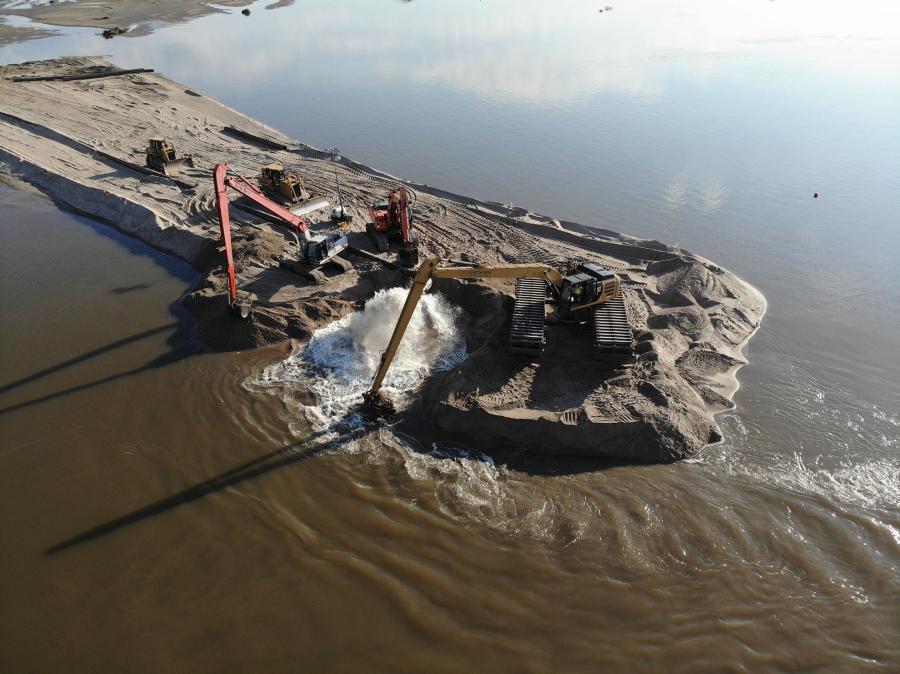 The Missouri River Levee System L-575 sustained seven breaches, along with significant other damage during the March 2019 event. These breaches ranged in size, with the largest breach being approximately 2,000 ft. in length. (USACE — Omaha District photo) Although much work remains following last year's devastating flooding, the U.S. Army Corps of Engineers (USACE), Omaha District, has officially closed breaches on the Missouri River Levee System L575. The L575 system provides an initial level of flood risk management to the area behind this downstream portion of the levee. "The 2019 flooding caused significant damage to more than 500 miles of levee systems throughout the Omaha District's area of responsibility," said Jeff Bohlken, program manager, systems restoration team, USACE, Omaha District. "A preliminary analysis was conducted and all of the levee repairs the Omaha District found to be cost-justified were approved for repair, as these levee systems provide significant benefits to landowners, communities and the nation." 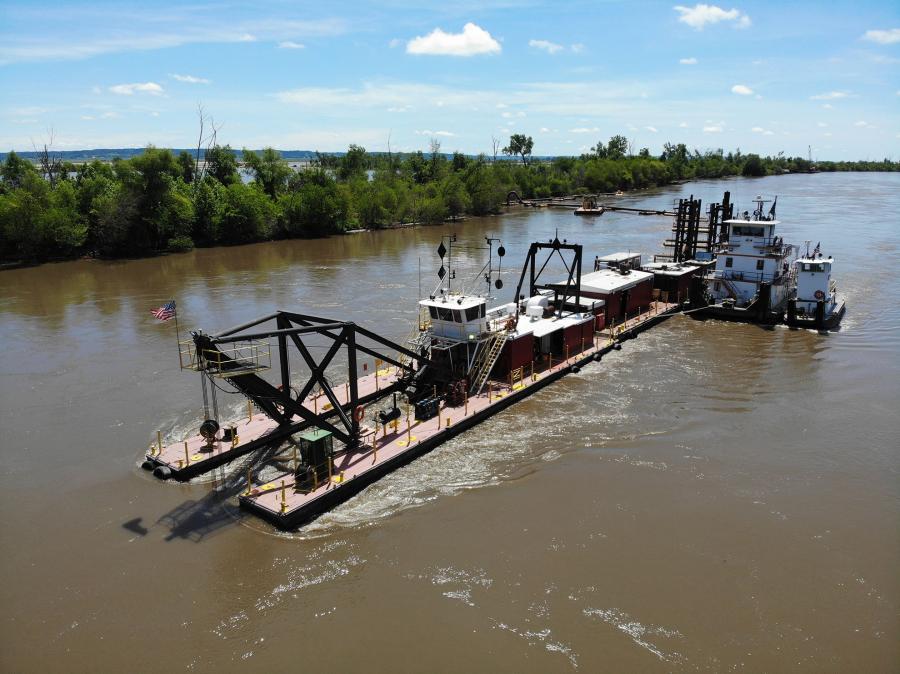 Crews managed to keep the work moving throughout the winter months. Bohlken said the 2019 flood that caused so much damage was actually a series of events. "The first, and most destructive, flood followed the March 2019 'Bomb Cyclone' that hit the Midwest. This event set record river stages at 45 different gages across four different states. Following the March event, another high-water event was experienced during late May and early June. No significant damage was experienced during this event, but the high-water levels did impact the ongoing flood repair efforts. "The third event occurred in mid-September, with nearly eight inches of rain across parts of Northeast Nebraska and Central and Eastern South Dakota. This event led to 19 river gages seeing historical river stages. Once again, there was not significant damage associated with this event, but it did impact ongoing flood repair efforts." The Missouri River Levee System L-575 sustained seven breaches, along with significant other damage during the March 2019 event. These breaches ranged in size, with the largest breach being approximately 2,000 ft. in length. According to Bohlken, closing breaches "A" and "B" were critical milestones in repairing the L-575 levee system. "Both these breaches were inlet breaches, locations where water was flowing from the Missouri River through the damaged levee system and into the area that is behind the levee system. By closing these two breaches this flow was 'cut-off' and the water levels behind the levee system were able to start draining out through the outlet breaches." The biggest challenge with designing the levee repairs has involved efforts to do so while the river was still at flood stage. "This meant that not only was water actively flowing through the breach locations during many of the repairs, but that the team was also not able to conduct an onsite damage assessment," said Bohlken. "To ensure levee repairs continued forward, the team utilized aerial imagery where site access was not possible to develop preliminary designs for repairs in those locations." 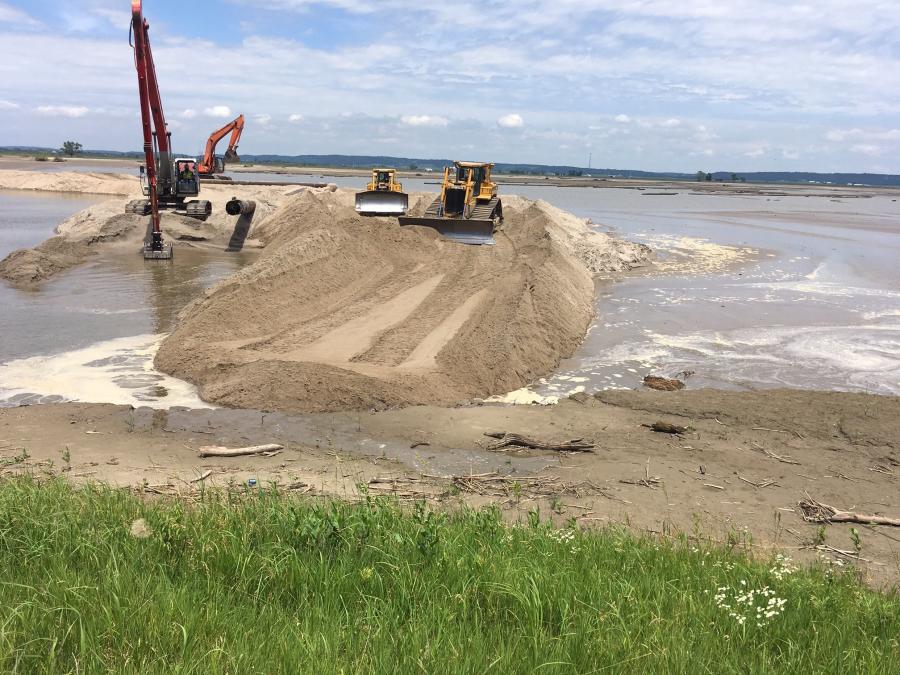 Bohlken also noted that the typical damage assessment process involves a team walking the levee system and identifying damage and supporting infrastructure. For some time, crews worked on the levee crest repairs at both the "A" and "B" inlet breach sites, increasing the resiliency of the repairs at these locations. The contractor conducting the efforts is Weston Solutions Inc. of West Chester, Pa., and is still on site. For L575, the contract for final levee repairs was awarded to Aptim Federal Services LLC of Alexandria, Va., in December 2019, in the amount of $58.3 million. To date, nearly $110M worth of repair contracts have been awarded on the L575 levee system. A final dollar amount is not certain at this time, as the team has not been able to fully inspect the damaged levee system. Bohlken noted that the significant repair efforts made to date would not have been possible without the levee sponsors and stakeholders. "There are project sites where the majority of the equipment operators are local farmers and landowners. Additionally, the levee sponsors have been instrumental in ensuring project site access and the availability of borrow material for the flood repair efforts. Area engineer Brendan Kight of the flood recovery construction office, construction division, Omaha District, USACE, said the biggest concern for the Omaha District regarding the 2019 flood repairs has been completing levee repair work through a very active weather season, and while the Missouri River was still at or above flood stage. "The Missouri River at Nebraska City was at or above flood stage for around 270 days in 2019, starting on March 15, which was more than three months longer than during the 2011 flooding. Most traditional levee repair methods are developed to repair the damaged levee system after flood waters have receded, so this added a much higher level of complexity to the repair process. "Additionally, it wasn't until October that there was a five-day stretch of weather were no precipitation fell in Omaha. This continued to saturate the already wet project sites, making repair efforts more difficult and requiring more handling and conditioning of materials, such as clay soil that is used to repair the levees." Many of the project sites along the Missouri River were either underwater or completely saturated when repair efforts began, and some of the sites are still completely saturated. This meant that the soil material that would have historically been used to repair the damaged levees was either inaccessible or saturated to a level that it would either require additional handling and conditioning to be used or was unusable. 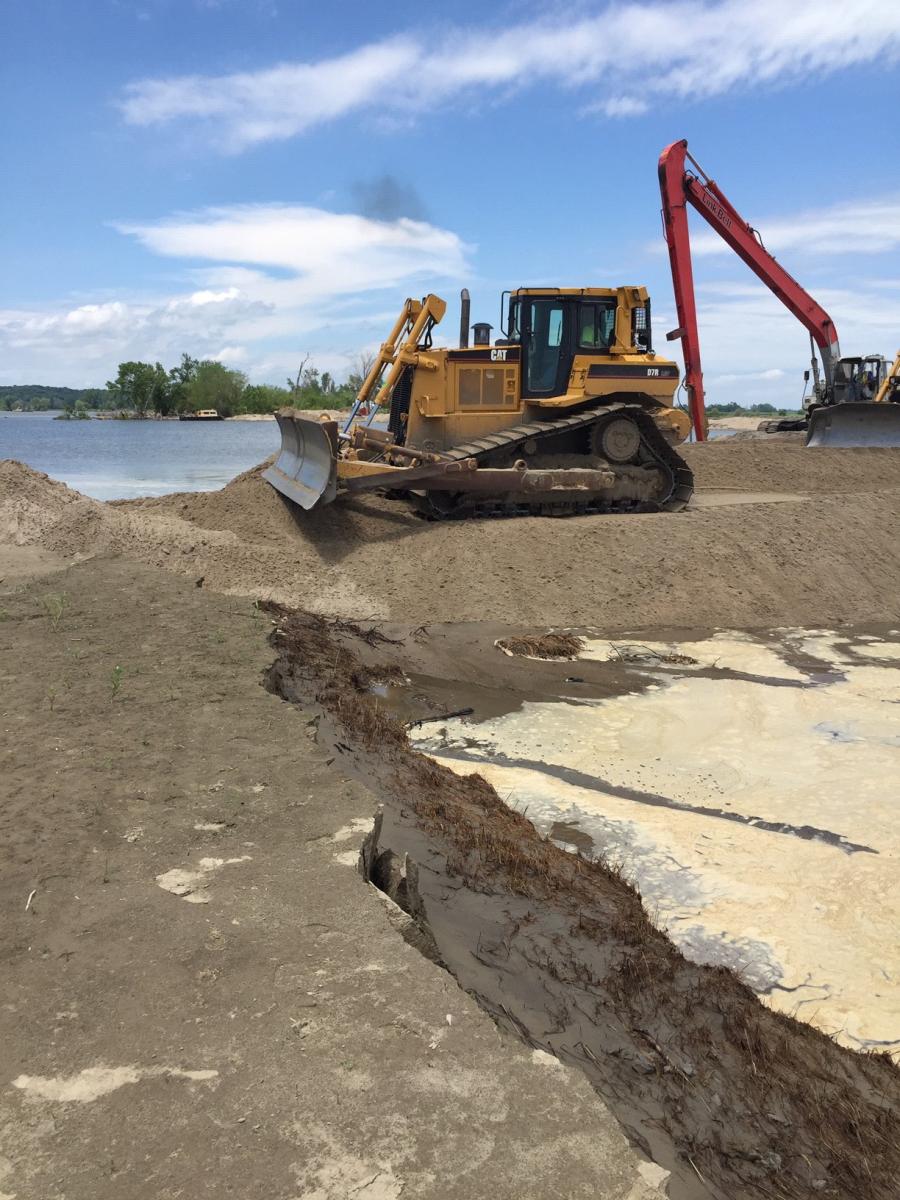 The team focused on repairing breaches and critical section loss areas. These locations represented the highest risk to life safety. At locations where possible, such as on many of the tributary systems, there also is a push to completely rehabilitate damaged levee systems so that the levees can be returned to the levee sponsors. Equipment being used on the job includes tractors with single or double pan scrapers; both long reach and conventional excavators; bulldozers; sheepsfoot compactors; smooth drum compactors; off-road dump trucks; side-dump trucks; on-road dump trucks; tugs and barges; and cutter-head dredges. Currently, more than 3 million cu. yds. of sand; 550,000 cu. yds. of clay; and 150,000 tons of rip-rap have been placed in support of the 2019 flood repair efforts. Kight said the primary concern when working near or on the water is the safety of everyone on site. "This means that at times work efforts may have been slowed or paused to ensure work was being done safely. Two other significant concerns have been site access and suitability of levee repair material, mainly clay soil. Substantial effort has gone into restoring site access to the levee repair locations, as the previous access routes were either under water or damaged/destroyed during the flooding. Additionally, local soils are highly saturated, making them harder to excavate and place." Weather has been a significant factor in the repair work, according to Kight. "Winter conditions can slow repair efforts, because some work can't be done during freezing temperatures, such as placing clay. Winter weather also slows work because site access becomes harder as snow accumulates." In addition, mining cohesive material has been a significant challenge for all the projects focused on repairing the Missouri River Levee Systems. "The majority of the cohesive soils in the local area are highly saturated, making them extremely difficult to excavate. There have been numerous occasions where construction equipment was getting stuck at the clay excavation [mining] sites because the soil was too saturated to work on/with. Additionally, once the clay has been excavated, it has required significant conditioning to dry to a level that it can be effectively placed to repair the damaged levee systems." As far as conducting resiliency and interim repairs throughout the L575 levee system, the team has focused on increasing the width and height of the repairs at both the "A" and "B" breach locations, as well as closing the downstream outlet breaches, where water behind the levee system from the upstream inlet breaches broke through the levee to get back to the Missouri River.  "There also has been a focus on restoring the critical section loss locations, as these also are significant 'weak spots' in the levee system that have a higher level of risk associated with them," said Kight. To restore areas that experienced significant erosion during the March 2019 flood event, the work process requires excavating the damaged location until a solid base to build upon can be established. Material is then placed in lifts and compacted until the entire levee section is restored. Restoring the levee crest requires a smaller-scale effort, including putting down an aggregate surface that allows vehicles to travel on top of the levee. The levee crest is one of the main ways to access the levee, so until the crest can be restored site access can be very limited. Kight noted that the most time-consuming part of the project so far has been securing materials for the levee repairs. "During previous flood events, such as in 2011, there was an abundance of material that was accessible and usable to repair the damaged levee systems. Due to the sustained high-water levels and active weather patterns experienced in 2019, material availability was extremely limited and a lot of the material that was available required more work to condition to a point where it could be used to repair the damaged levee systems." CEG  |
| You are subscribed to email updates from "water damage flood restoration" - Google News. To stop receiving these emails, you may unsubscribe now. | Email delivery powered by Google |
| Google, 1600 Amphitheatre Parkway, Mountain View, CA 94043, United States | |


Comments
Post a Comment