“Dry Star Restoration Offers Services of Emergency Water Damage Contractors in Phoenix - StreetInsider.com” plus 2 more

“Dry Star Restoration Offers Services of Emergency Water Damage Contractors in Phoenix - StreetInsider.com” plus 2 more


Dry Star Restoration Offers Services of Emergency Water Damage Contractors in Phoenix - StreetInsider.com

Posted: 30 Jul 2020 04:20 PM PDT

[unable to retrieve full-text content]Dry Star Restoration Offers Services of Emergency Water Damage Contractors in Phoenix  StreetInsider.com

Hyde Seeks FEMA Grants to Raise 114 Homes - Island Free Press

Posted: 30 Jul 2020 06:57 AM PDT

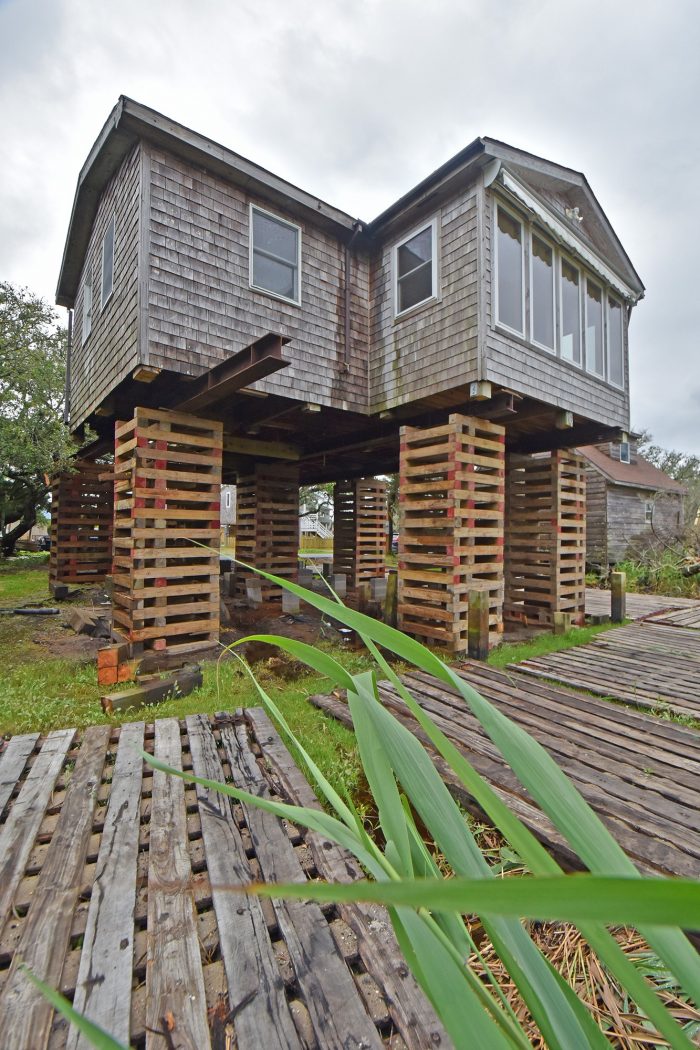
A home on Ocracoke Island is shown in the process of being elevated to protect it from flooding like that seen during Hurricane Dorian in September 2019. Photo: Dylan Ray

Ocracoke Island has long been famous for its charming cottages with front porches and flowers in tiny yards, tucked alongside narrow, tree-shaded roads winding through the village. But there's nothing charming about being slammed with 7 feet of flood water.

In the wake of the devastation in September 2019 from Hurricane Dorian, Hyde County is seeking funding from the Federal Emergency Management Agency to elevate 114 houses in Ocracoke Village to about 8 feet above ground elevation, a proactive measure that will provide more resilience to the historic fishing community and popular tourist destination.

"It will look a lot different," county manager Kris Noble said in a recent interview.

But Noble knew from the moment she saw Dorian's wrath from the air what needed to happen for Ocracoke to recover: Its buildings had to be raised above flood waters.

"As we were flying over, it was basically just water and rooftops," the manager recalled of the day-after storm scene. "The only dry land was the ball field."

Noble, a Hyde County native, remembers when Swan Quarter, the county seat on the mainland, was flooded nearly as badly during Hurricane Isabel in 2003, when the courthouse, the firehouse and numerous homes in the unincorporated community — all barely above sea level – were inundated. Since then, she said, residents exhausted by fear of flooding, adapted to the changes in the interest of safety.

"Now when you ride through the village of Swan Quarter," Noble said, "you see lots of elevated houses."

Ocracoke Village, situated on the southern end of the Outer Banks between Pamlico Sound and the Atlantic Ocean, has had its share of storm damage over its centuries-long history. But no one alive today has ever seen the water come up so high so fast.

Nearly every single property, including vehicles, suffered flood damage. Restaurants, inns, bed-and-breakfasts, motels, retail stores, outdoor recreational sites — all were affected. Cape Hatteras National Seashore had severe damage to its staff housing and National Park Service infrastructure, although fortunately the park's famous Ocracoke ponies escaped unharmed.

"The ponies are like the people here," Noble said. "They're resilient."

The state Department of Transportation also had damage to its ferry infrastructure and N.C. 12, the sole highway on the island, was severed and closed until Thanksgiving.

Noble said that the county had estimated that there was $30 million in property damages, not including the park service and NCDOT. After herculean cleanup efforts and complications from COVID-19, the village was able to recover enough to reopen to visitors this summer. Still, she said, between the losses in property and revenue and safety restrictions due to the pandemic, there are a number of businesses and attractions that have closed for good or have had to delay reopening.

Still, she said, the community has endured months of terrible stress and managed to restore and maintain much of the village's character.

"The face is changing, but the face is beautiful," Noble said. "It's more attractive. It's just been a really hard process."

Chris Hilbert, with Wilmington-based Holland Consulting Planners, or HCP, said in an interview that he had first worked with Hyde County on housing mitigation work about 20 years ago. Often, he said, it can take two to five years to get the funding from FEMA. In the meantime, some homeowners find alternate sources of money to fix up their homes.

After Hurricane Isabel in 2003, 150 applications were submitted for grants to elevate or acquire properties on the mainland. Acquisitions are less common because of the high property values. Of the 50 applicants that were approved, 29 or so were elevated, including Noble's house, he said. Mainland Hyde County, especially Swan Quarter, had also been hit hard in Hurricane Floyd in 1999, Hilbert explained. So, with damages inflicted again during Isabel, the repetitive losses made the grant money flow.

Additional applications were submitted by Hyde County in 2011 after Hurricane Irene, which flooded the Scranton area of the mainland. Since then, about 20 homes were mitigated, he said.

Then Hurricane Matthew came through in 2016, but Ocracoke felt the impact instead of the mainland. Although 12 applications for mitigation were submitted to FEMA, he said, the agency never got around to telling the county if it was even eligible.

Next, in 2018 there was Hurricane Florence, which bypassed Ocracoke for the mainland, again near Scranton. The county hired HCP in January 2019 to help with the application process.

Hilbert said he was in the process of trying to secure FEMA grants for Florence-damaged properties when Hurricane Dorian hit Ocracoke. A letter of interest had already been submitted to the agency by Hyde County, which turned out to be fortunate because it allowed the county to immediately set up an application process for Dorian mitigation for island properties.

Since the Florence applicants had not yet been submitted to the agency, N.C. Emergency Management, which administers FEMA funding in the state, was able to add Hyde County's Dorian applications to the Florence applications.

An HCP housing inspector went to the island within a week to assess the situation and help the county secure state disaster recovery funds, Hilbert said June 30 in an email. The consultant returned later to photograph properties for the applications and provided a base map.

Hilbert said that the housing mitigation grants require approval from the state and FEMA, which explains why numerous locations are still dealing with Matthew grants.

"The really positive news is the State is finishing their review only 9 months after the actual event," he wrote, "so the FEMA process must begin now, which will include environmental review and approval of 75% funding. The State will then pick up the other 25%."

Hilbert said he can't predict how many applicants will be approved, but in general, FEMA has been prioritizing lowest elevations and repetitive-loss properties. With many cottages at ground level, that should make Ocracoke a prime candidate.

Ocracoke, which has a year-round population of about 900, is not alone in having so many homes at sea level, he said. Between Hurricane Hazel in 1955 and Hurricane Fran in 1996, there were not many big storms on the East Coast. But Hazel did inspire a lot of construction of cinder block on slab houses, such as those in Atlantic Beach and Carolina Beach. The thinking was they could withstand flood waters, except they were still built barely above ground level. Even after Floyd's massive flooding, people were still thinking it was a "once-in-a-lifetime" event, Hilbert said.

New houses on Ocracoke started being built on pilings in the 1990s, but having many more houses elevated will undoubtedly change the cozy feel in the village. The trade off, of course, is safety.

"That's really what Ocracoke is looking at," Hilbert said in the interview. "It'll be fairly transformative."

Considering the island's location on the edge of the continent sticking out into the Atlantic Ocean, he said, Ocracoke has been fairly lucky to have dodged the bullet for as long as it did. And even when villagers wanted to raise their homes, until recently, there was no funding available to help them.

"It's been a long time coming, but it's almost been just a waiting game," he said. "There was no government program that could provide money until they could show the need."

Amy Howard, a native islander who manages her family's business, The Village Craftsmen, on Howard Street, said that every one of the family's buildings flooded to some extent, but her house on the corner got hurt the worst.

Built by her grandfather in 1957, Howard said the house was stripped down to three walls and subfloor. It has now been rebuilt and is standing 12 1/2 feet in the air, waiting to be permanently placed on pilings 8 feet above ground level.

But Howard, 48, said that while it's a relief to not have to worry about flooding, the idea of elevated houses takes some getting used to "because I love the little low houses … running up to somebody on the porch … that community feel."

The fact is, she said, most Ocracoke villagers know the risks of living on their island, and don't see it as any more dangerous than living in other places prone to earthquakes, tornadoes, landslides or wildfires.

"I think most of us feel fairly optimistic," she said.

Noble agreed that the community is looking forward, not back.

And if another storm comes this hurricane season?

"We'll batten down the hatches," she said. "I pray we get a break for a few years."

ANALYSIS: 11 winners and losers in the Isaac budget - CQ News

Posted: 30 Jul 2020 12:00 PM PDT

AN INNOVATIVE budget to face extraordinary times was how mayor Anne Baker described Isaac Regional Council's offering at this year's budget meeting.

Steadying the region for a health and economic crisis, Cr Baker said the 2020-21 council budget was a reflection of her team's "innovative, responsive and compassionate leadership".

But not everyone can be a winner if council is to keep its bottom line in check.

Here are the biggest winners and losers in this year's council budget.

WINNERS

Households

FAMILIES can breathe a sigh of relief as Isaac Regional Council announced a rate freeze for the next 12 months.

Last year, council moved in increase general rates 1.5 per cent across the board, however in the 2020-21 budget has frozen charges for residential ratepayers and other properties.

There would also be a zero per cent increase waste and sewer utility charges.

Residents on land worth less than $40,000 will be hit with a minimum general rates bill of $713, while homes worth over $61,000 will be charged at least $1413.

Some homes will be hit with an increased water bill, with high-usage homes being hit with a 30 cent increase on usage over 75 Kls.

Big ticket upgrades to some town water supplies could impact resident bills, with water infrastructure charges to differ in each district.

Read more:

Rates freeze for families, as mega mines hit in budget

Pandemic pay rise rejected by council

Meet Isaac region's most inspiring women for 2020

Small business

Small businesses across the Isaac region will benefit from a zero per cent increase in rates. Photo: Rob Maccoll

Small businesses across the Isaac region will benefit from a zero per cent increase in rates. Photo: Rob Maccoll


A RATES freeze is expected to help small business as Isaac prepares to be battered amid the pandemic recession.

Commercially zoned businesses will be charged a minimum of $1034.50, with an unimproved valuation of 2.2395 cents in the dollar.

Like households, businesses would also benefit from waste and sewer utility charges being frozen.

Farmers

Lewis Anderson, 6, playing in the water on his farm in the Kilcummin area north of Clermont. Photographer: Liam Kidston.

Lewis Anderson, 6, playing in the water on his farm in the Kilcummin area north of Clermont. Photographer: Liam Kidston.


RURAL landowners will not face an increase in their general rates.

The minimum general rate has been frozen at $713, with the unimproved valuation costing between 0.4527 and 0.6610 cents on the dollar depending on the farm.

But farmers are likely to be hardest hit by the increasing high-volume water charges, with water increasing from $1.80 to $2.10 per kilolitre for usage over 75 Kls.

Drivers

The 2020-21 budget has set aside $28.3 million for roads and drainage projects. Photo: Zizi Averill

The 2020-21 budget has set aside $28.3 million for roads and drainage projects. Photo: Zizi Averill

ISAAC is paving its budget with bitumen, with the roads budget set to take up more than half of the council's capital works spending this year.

The 2020-21 budget has set aside $28.3 million for roads and drainage projects.

This was an increase of $900,000 from last year's spend.

Cr Baker said roads were vital arteries for residents, tourists, and mining enterprises and other business operators, and again this year would be the biggest single council investment area.

"Isaac has an extensive road network that connects our people and helps pave the way to economic prosperity in the future," she said.

"Council continues to take a very strong view that road infrastructure and maintenance represent a core service with a massive impact on safety, travel time, flood access, freight and business throughout our region."

Repairing the damage from ex-cyclone Trevor is expected to suck up 40 per cent of the roads budget, with $12.1 million allocated to restoration works.

Rural roads are due for a facelift, with $4.1 million allocated to road re-sheeting, $1.9 million for road rehabilitation programs, and $490,000 for drainage renewal.

A further $1.6 million will be spent on region-wide bitumen surfacing renewal and $900,000 for a natural disaster resilience floodway construction program.

"Pioneer Road has been allocated $100,000 for engineering design to upgrade sections of the road, while $50,000 has been allocated for the engineering design to replace Bully Creek bridge on Hyde Park Road," Cr Baker said.

Read more

Tom Hanks coronavirus case puts councillor in isolation

Seaside towns fighting to keep their power on

'We need to keep the legacy of rural shows alive'

Cyclists

CLERMONT cyclists are the biggest winners in council's $586,000 network upgrades.

The mine and cattle town will receive $244,000 of the bike path funding.

Bins, tips and toilets

Isaac Regional Council will throw $9.3 million into waste and waste water management projects this year

Isaac Regional Council will throw $9.3 million into waste and waste water management projects this year


COUNCIL will throw $9.3 million into waste and waste water management projects this year.

The waste budget had the largest boost to its bottom line, with an extra $2 million to play with compared to last year's budget.

Most of that cash appears to be drained directly from wastewater funding, which was cut by $1.7 million.

Cr Baker said $5.2 million would be spent on waste management and $4.1 million for wastewater this financial year.

Stormwater improvements projects have been funded in Moranbah and Clermont and $490,000 would be spent across the region on rural drainage renewal.

Parks and sports

AMID a health and economic crisis, Isaac has drafted a "liveability" budget to help the region build active, attractive communities.

A total of $1.7 million has been put into the council's parks and recreation budget in 2020-21, $867,000 more than last year.

"Council wants to help provide very 'liveable' communities, with excellent facilities for family life and for sport and recreation, across the region," Cr Baker said.

Mayor Baker said the council budget assets recognised the importance of helping residents achieve an appropriate work-life balance.

"People come to the Isaac for an opportunity and discover reasons to stay," Cr Baker said.

"We continue to invest in those places and spaces which provide a venue for our communities to gather and enjoy the fantastic lifestyle we have to offer."

LOSERS

The bottom line

A "FRUGAL" budget will allow Isaac to scrape by in the black, despite massive concessions to households and small businesses.

Cr Baker said council had worked hard to create a balanced budget.

"(It's) a budget that is sustainable and responsible, taking into account current economic conditions, including the current COVID-19 pandemic and recession," she said.

But the budget concessions to prepare for an economic hit has cut into the council's savings.

Isaac would have $24.5 million in total capital income and expenditure at the end of this year, but that was expected to drop to just $5.1 million by 2021-22.

The 79 per cent drop in total capital was a far cry from what the region had predicted a year ago.

In the 2019 outlook, Isaac was expected to maintain its healthy surplus, with $22.8 million predicted for 2021-22.

Big business

Mega mining companies and other big industries will foot the bill for the council's frozen revenues, with a general rates increase for large businesses in Isaac. Photo: Macarthur Coal Ltd

Mega mining companies and other big industries will foot the bill for the council's frozen revenues, with a general rates increase for large businesses in Isaac. Photo: Macarthur Coal Ltd


MEGA mining companies and other big industries will foot the bill for the council's frozen household revenue stream, with a general rates increase for large businesses in Isaac.

"For big business, the rates rise will be 2.5 per cent, close to previously foreshadowed rates increases and only marginally above the national CPI for March 2020 of 2.2 per cent," Cr Baker said.

"Those same businesses that have large residential property portfolios will, however, benefit substantially from the zero per cent increase for those properties."

Community facilities

Pools, halls and libraries had a third of their budget slashed in this year's council budget. Photo: Zizi Averill

Pools, halls and libraries had a third of their budget slashed in this year's council budget. Photo: Zizi Averill


POOLS, halls and libraries had a third of their budget slashed in this year's council budget.

The 2020-21 budget slashed community facilities spending by $1.8 million, from $5 million last year to $3.2 million.

The community facilities cut comes as Cr Baker promised a "liveability" budget, with an $867,000 increase to parks and recreation.

Water budget

Resident Jess Walsh holding a glass of the discoloured water Clermont residents experienced in February. Photo: Zizi Averill

Resident Jess Walsh holding a glass of the discoloured water Clermont residents experienced in February. Photo: Zizi Averill

ISAAC council has cut $300,000 from its water budget compared to the 2019-20 plan.

Last year, the council allocated $6.2 million for water projects, which dropped to $5.9 million this year.

Clermont was the biggest winner, with 80 per cent of the water budget poured in to fix the town's water supply after residents faced weeks of yellow and brown coloured water in February.

Installing rural water points will cost ratepayers an additional $150,000, but council said the project would improve the council's delivery of roadworks and other essential services.

Comments

Popular Posts

“Editorial Working Groups - Science Advances” plus 1 more

Water damage restoration: A step-by-step guide to the process - Augusta Free Press

How to Dry Out a Water-Damaged Carpet You Can't Replace - Lifehacker